Have you ever paused to truly look at a statue?
The gentle smile, the depth in its eyes, the delicate carvings — there’s always something that sets it apart. Discover what makes each statue unique—behind the craft lies the skill, vision, history, and symbolism that shape every masterpiece with Pratimaa.
At Pratimaa, we believe statues aren’t just made of stone or wood.
- They hold stories.
- They express emotions.
- And they reflect the soul of the artisan who created them.
1. The Artist’s Heart Lives Within the Statue
Every statue begins not with tools, but with an idea in the artist’s mind.
Our artisans create with their hands, but also with their hearts. Their vision, their touch, their carving style — each leaves a personal mark on the piece.
That’s why even if two artisans work on the same deity, their statues will never be identical.
Sometimes the difference lies in the curve of a smile, sometimes in the sparkle of the eyes, sometimes in the posture.
Every artist breathes their individuality into the statue — and that’s where its uniqueness begins.
2. Nature’s Gift: The Magic of Materials
The choice of material plays a huge role in giving each statue its distinct character.
Stone statues exude strength and timelessness. Natural veins and patterns in the stone make every piece one-of-a-kind.
Wooden statues bring warmth and flow, with each grain adding its own personality.
Metal statues shine with intricate detailing and durability, often lasting generations.
Even two statues carved from the same block of stone will look slightly different, because nature itself adds its own signature to each creation.
3. Inspired by Culture and Mythology
One of the most beautiful aspects of Indian sculpture is how deeply it’s connected to culture, traditions, and stories.
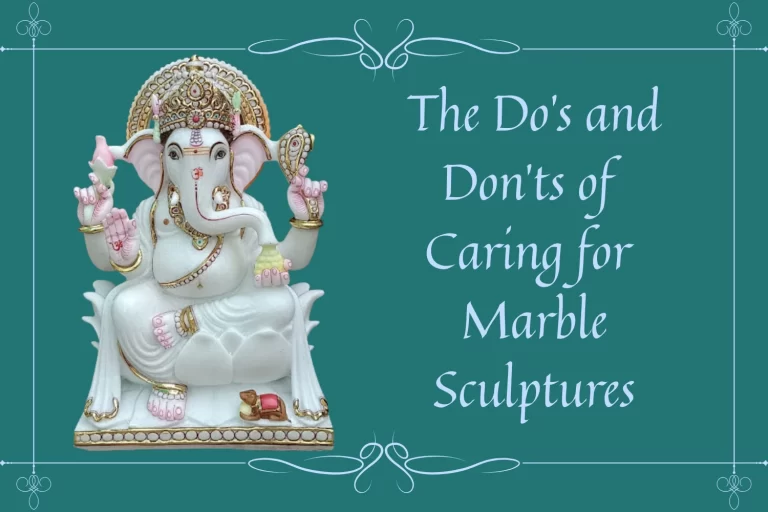
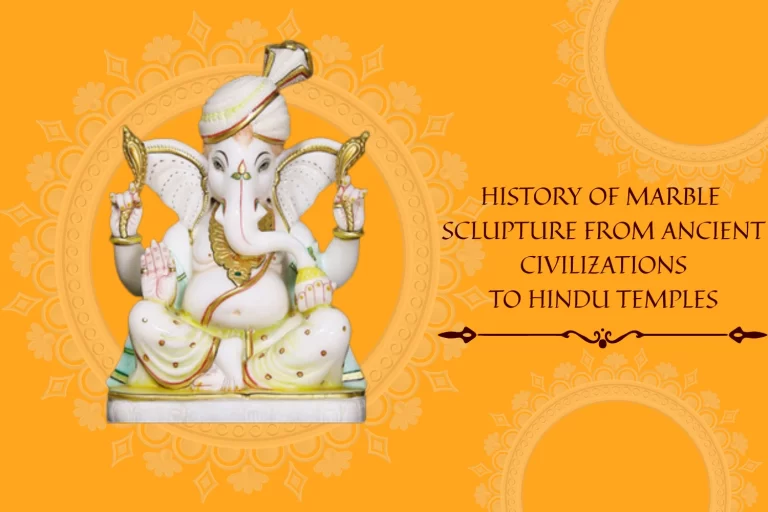
Take Lord Ganesha, for example. His statues come in many forms:
- Bala Ganesha – childlike and playful
- Nritya Ganesha – dancing and full of energy
- Shubh-Labh Ganesha – symbolizing prosperity and blessings
Regional styles also shape these forms.
Southern Ganeshas are often richly adorned with crowns and ornaments, while Northern depictions highlight serene expressions and elegant postures.
These cultural interpretations ensure that each statue tells a different story, even if the subject is the same.
4. From Imagination to Sculpture – A Beautiful Journey
Crafting a statue is a thoughtful, step-by-step process:
- Sketching & Visualization – the artist imagines the form and draws the outline.
- Rough shaping – the basic structure starts to emerge from stone, wood, or metal.
- Detailed carving – facial expressions, ornaments, and textures bring it to life.
- Polishing & finishing – the statue gains its final personality and shine.
During each stage, the artisan interprets, improvises, and pours emotion into the work.
Something as small as a tilt of the eyes or a curve of the lips can completely change the statue’s aura.
5. Symbolism Hidden in Every Detail
Traditional statues are rich in meaning.
Every hand gesture (mudra), accessory, and posture carries symbolic significance:
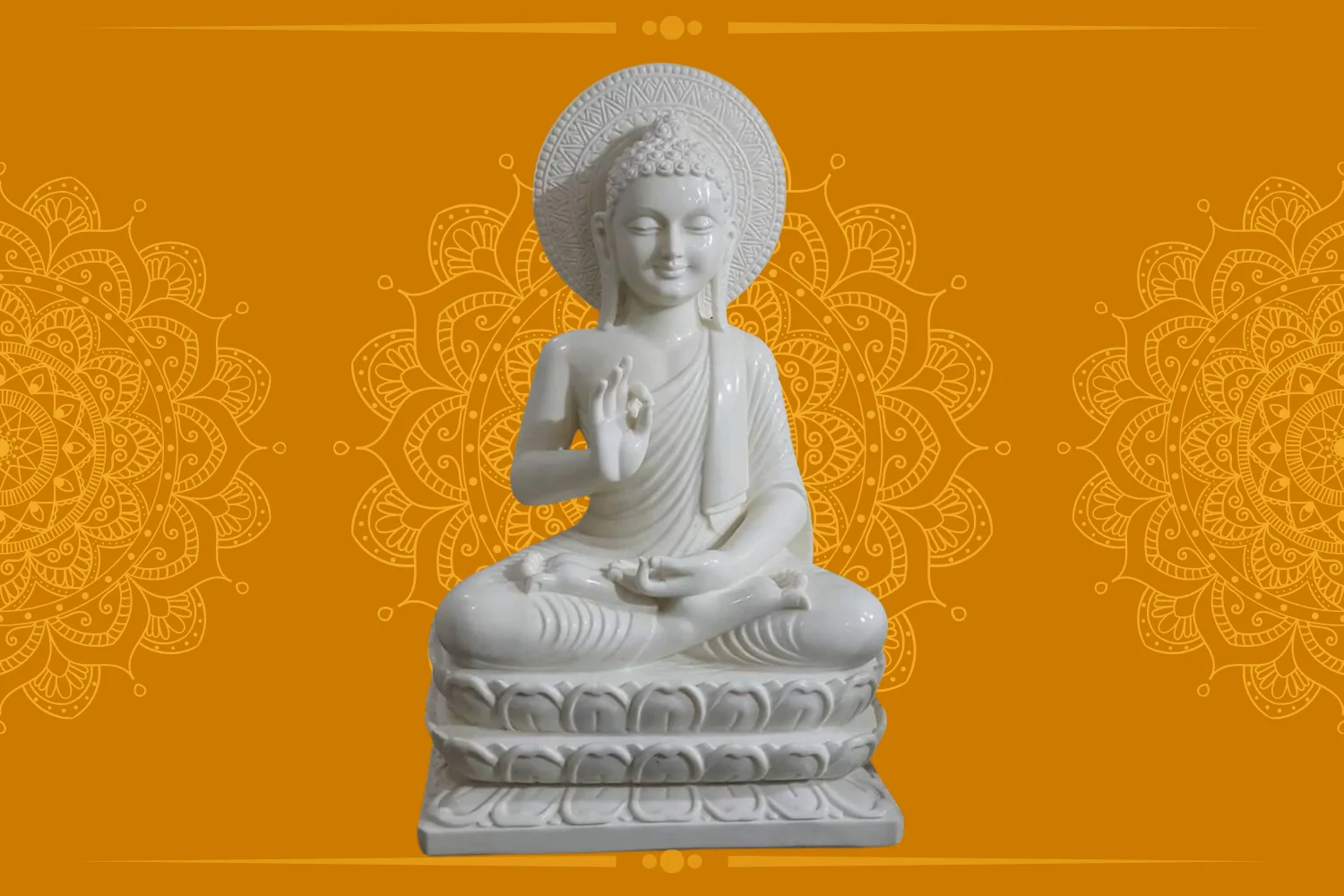
Dhyan Mudra in Buddha statues represents peace and meditation.
Abhaya Mudra (raised hand) signifies protection and blessings.
A lotus base symbolizes purity and spiritual growth.
Artisans often blend these traditional symbols with their own artistic interpretations, what makes each statue a unique spiritual expression, not just a decorative object.
6. Tradition Meets Modern Design
Today, statue making beautifully combines age-old craftsmanship with modern creativity.
Some artisans follow classical styles exactly as they’ve been for centuries. Others experiment with minimalist lines, new materials, or fusion designs to fit contemporary spaces.
At Pratimaa, we encourage both — honoring tradition while embracing innovation.
The result? Statues that carry the depth of heritage and the freshness of modern design.
7. Imperfections Make It Perfect
Unlike machine-made replicas, handcrafted statues have tiny variations — a faint carving line, a slight asymmetry, or a natural color shift.
But these aren’t flaws
- They’re the artisan’s fingerprints.
- They’re what make the piece feel alive and authentic.
Collectors often look for these subtle signs, because they know — true beauty lies in these human touches.
8. Where Art Meets Devotion
In many Indian traditions, making a statue is not just a craft — it’s a spiritual practice.
Artisans often pray before beginning, chant while working, and bless the statue before it leaves their workshop.
This deep connection fills the piece with positive energy and reverence, transforming it from an object into something sacred.
Conclusion: Every Statue Holds a Story
Each handcrafted statue carries within it —
- the artisan’s heart,
- nature’s uniqueness,
- cultural stories, and
- a touch of spirituality.
That’s what makes them truly special.
At Pratimaa, we celebrate this timeless art. We support skilled artisans, preserve traditional techniques, and bring these soulful creations to homes and hearts around the world.
Next time you see a statue, take a moment to really look at it.
Behind every curve, every detail, lies a story waiting to be felt. What Makes Each Statue Unique